



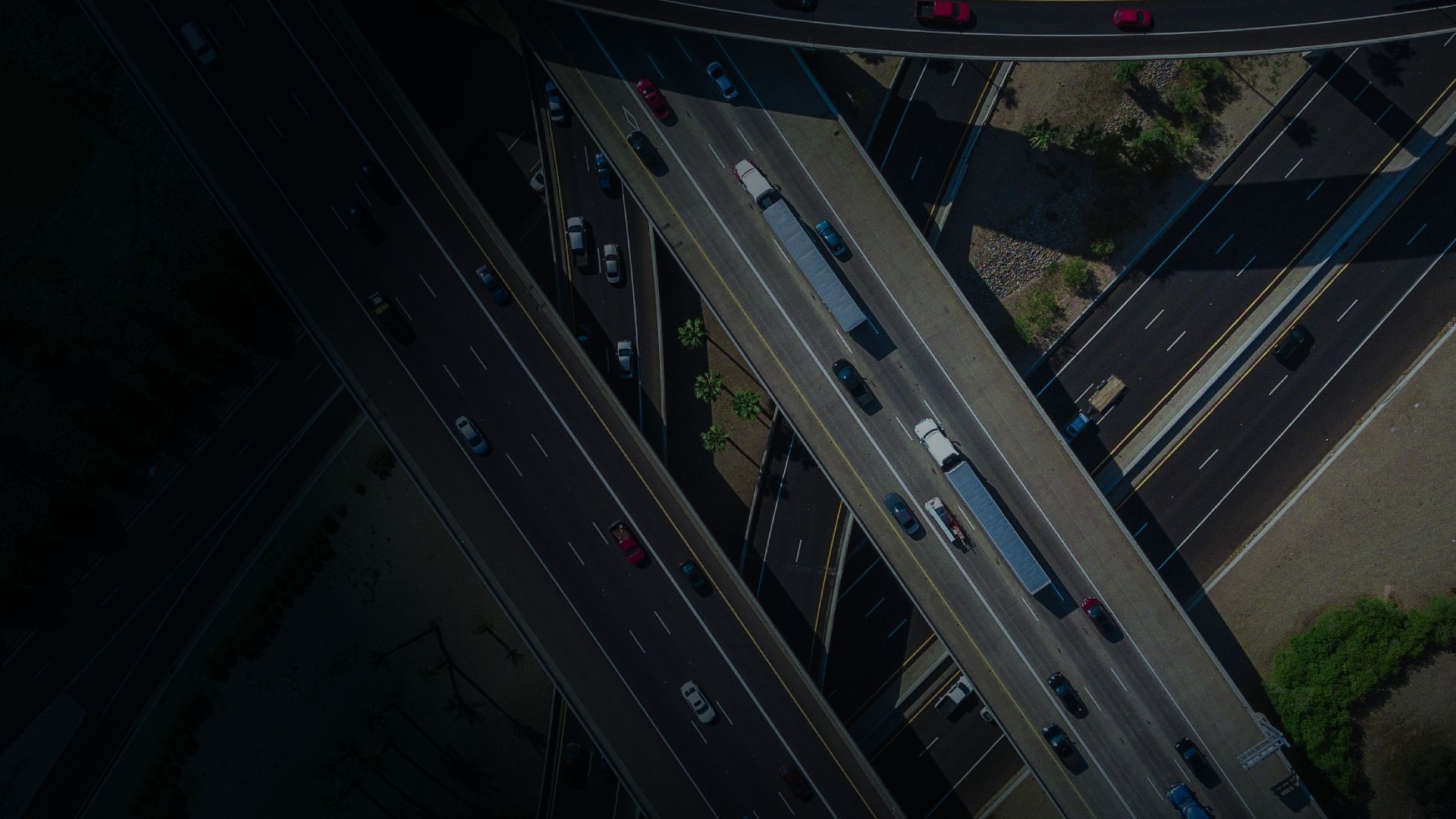
The 610 Loop moves fast, and it does not forgive mistakes. Lanes merge without much warning, commercial trucks run alongside commuters, and traffic volumes during rush hour create the kind of stop-and-go conditions where rear-end collisions happen almost daily.
When an accident happens on the 610, or anywhere else in Houston, the question of who was negligent rarely answers itself. Insurance companies do not accept fault based on how obvious it looks. They require proof, and they spend considerable resources finding reasons to dispute it.
At Diamond Injury Law, proving negligence in Houston car accident claims is the foundation of everything we do. Understanding what that process actually involves, and why it is harder than most people expect.
What Negligence Actually Means in a Texas Car Accident Claim
Negligence is not just careless driving. In a Texas personal injury claim, it is a legal standard with four specific elements that have to be established before liability attaches. Missing any one of them can sink a claim regardless of how clear the fault appears.
- Duty – Every driver on a Texas road owes a reasonable duty of care to others. This one is rarely disputed. It exists the moment someone gets behind the wheel.
- Breach – A breach is when a driver fails that standard. Running a red light, following too closely, and driving distracted. On the 610, where merges are aggressive and speeds are high, breach is usually where the fight starts.
- Causation – It is not enough to show the other driver did something wrong. You have to show it caused your injuries. Insurance companies challenge this constantly, especially when there is a gap in medical treatment or when visible vehicle damage looks minor.
- Damages – There have to be documented losses. Medical bills, lost income, pain and suffering. Without them, negligence is a finding with nothing attached to it.
All four elements have to hold up together. An experienced Houston car accident lawyer builds the case around each one, not just the most obvious.
Why the 610 Loop Creates Specific Negligence Challenges
Every Houston highway has its own character when it comes to accident investigations. The 610 Loop is one of the more complex ones.
It circles the inner city and connects to nearly every major corridor in Houston, which means traffic composition changes constantly. You can go from bumper-to-bumper commuter traffic to high-speed interstate flow within a mile. The interchange clusters at I-10 on the West Loop, I-45 on the South Loop, and US-59 near Greenway Plaza rank among the busiest and most collision-prone in the state. Commercial trucks, delivery vehicles, and construction equipment are a constant presence.
- That complexity produces negligence disputes that are harder to resolve than a standard intersection crash:
- Merge disputes at high-speed interchange points where both drivers claim the other failed to yield
- Rear-end collisions in stop-and-go traffic where following distance becomes a contested issue
- Lane change accidents where dashcam footage and witness accounts conflict
- Commercial vehicle accidents introducing employer liability, driver hours logs, and federal compliance records
- Construction zone collisions where shifting lane configurations and reduced speed limits change the fault analysis
Each scenario requires a different evidentiary approach. The negligence framework is the same, but the facts that support or undermine each element change based on where and how the crash happened
Each of these scenarios requires a different evidentiary approach. The negligence framework is the same, but the facts that support or undermine each element change based on where and how the crash happened.
How Negligence Gets Proven in a Houston Car Accident Case
Proving negligence is an evidence problem before it is a legal one. The legal standard is clear. What determines the outcome is whether the evidence supports each element strongly enough to withstand the insurance company’s challenge.
The Police Report
The police report is the starting point for most negligence analyses. It documents officer observations, any citations issued, initial driver statements, and a diagram of the scene. It is not the final word on fault, and insurance companies know that, but it creates the baseline that everything else is measured against.
A report that does not clearly assign fault is not the same as one that clears you. Adjusters read reports carefully for details that support their position, including observations the officer recorded without intending them as fault findings.
Physical Evidence at the Scene
Vehicle damage patterns, point of impact, skid marks, debris fields, and the final resting position of both vehicles all tell a story about how the crash happened. Accident reconstruction experts can work backward from physical evidence to establish speed, direction, and the sequence of events leading to the collision.
On the 610, where crashes often involve multiple lanes and high speeds, physical evidence is frequently the most reliable account when driver statements conflict.
Video Footage
The 610 Loop has substantial camera infrastructure, including TxDOT traffic monitoring cameras, private business surveillance along the frontage roads, and dashcams from nearby vehicles. That footage has a short shelf life. TxDOT cameras typically overwrite within days. Business systems often loop within 24 to 72 hours.
Preservation letters have to go out within hours of the accident, not days. That window is often what determines whether video evidence exists at all.
Witness Accounts
Independent witnesses carry significant weight in negligence disputes, particularly when driver accounts directly contradict each other. On a highway like the 610, witnesses rarely stop at the scene. Finding them afterward requires canvassing nearby businesses, reviewing traffic camera footage for other vehicles in the area, and sometimes reaching out through law enforcement reports.
Driver Records and Vehicle Data
In commercial vehicle cases, driver logs, maintenance records, and electronic data from the vehicle itself can establish negligence that goes beyond the crash itself. A driver who exceeded legal hours of service, or a fleet vehicle with documented maintenance failures, opens liability that extends to the employer or fleet operator.
Modern passenger vehicles also collect data. Event data recorders, sometimes called black boxes, capture speed, braking, and steering inputs in the seconds before an impact. That data requires timely preservation requests to be recoverable.
How Insurance Companies Fight Negligence Claims in Houston
Insurance companies do not dispute negligence randomly. They target the elements that are hardest to prove and the evidence that is easiest to reframe.
- Attacking Causation – If there is a gap in medical treatment, adjusters argue the injuries came from somewhere else. If the vehicle damage looks minor, they argue the impact could not have caused the reported harm. Countering both requires consistent medical documentation and often expert testimony tying the crash mechanics to the injuries.
- Inflating the Injured Party’s Fault – Under Texas Civil Practice & Remedies Code Section 33.001, fault above 50 percent bars recovery entirely. Adjusters look for anything that supports attributing you, including speed, lane position, and statements made at the scene. On the 610, where driving behavior is complex by nature, this argument has more to work with than a straightforward intersection crash.
- Minimizing Documented Damages- Even when liability is clear, the damages figure gets contested. Future medical costs, lost earning capacity, and pain and suffering are all targets. Presenting them effectively requires documentation that goes well beyond the initial bills.
What Diamond Injury Law Does Differently
The negligence framework does not change based on who handles the case. What changes is the speed and quality of the work behind it.
We treat the first 48 hours after a crash as the most critical window in the case. Preservation letters go out immediately to TxDOT, nearby businesses, and any commercial vehicle operators involved. If there is relevant dashcam footage from surrounding vehicles, we work to identify it before it overwrites. That window closes fast, and evidence lost in those hours is rarely recoverable.
On liability, we do not accept the insurance company’s initial fault framing. We pull the police report, identify the details adjusters will use against you, and build a counter-narrative grounded in physical and video evidence, before any recorded statement goes on the record from our client.
On damages, we document beyond the immediate medical bills. Lost income, future care needs, and non-economic harm all require a different kind of record-building than most people think to do on their own. We coordinate that documentation from the start of the case, not as an afterthought.
On the 610, where crashes often involve multiple contributing parties, another driver, a commercial operator, a fleet company, or a road condition created by a construction contractor, identifying all liable parties early is what determines the ceiling on recovery. Settling before that analysis is complete is how injured people leave money on the table.
Speak With a Houston Car Accident Lawyer About Your Case
At some point, the insurance company is going to tell you what your case is worth. The question is whether you know enough to push back.
The attorneys at Diamond Injury Law will review what happened, assess what the evidence shows, and make sure you are not walking into that conversation without the full picture. You should not make the decision blindly. Contact us today.
Frequently Asked Questions
What do I have to prove to win a car accident negligence claim in Texas?
You have to establish four elements: that the other driver owed you a duty of care, that they breached it through their driving behavior, that the breach directly caused your injuries, and that you suffered documented losses as a result. All four have to hold up together. A strong case on three elements and a weak one on the fourth gives the insurance company room to work.
How is fault determined after a car accident on the 610 Loop?
Fault is determined through a combination of the police report, physical evidence at the scene, video footage from traffic and surveillance cameras, witness accounts, and any available vehicle data. On the 610, where crashes often involve multiple lanes and high speeds, physical evidence and video footage tend to carry more weight than driver accounts alone.
Can I still recover damages if I was partially at fault for the accident?
Yes, as long as your share of fault does not exceed 50 percent. Under Texas Civil Practice & Remedies Code Section 33.001, your compensation is reduced by your fault percentage. A 25 percent fault finding on a $200,000 claim reduces your recovery to $150,000. Cross 51 percent and recovery is barred entirely.
How quickly does evidence disappear after a Houston highway accident?
Faster than most people expect. TxDOT traffic camera footage typically overwrites within days. Business surveillance systems often loop within 24 to 72 hours. Skid marks and debris get cleared by road crews. Witnesses become harder to locate as time passes. The investigation needs to start the day of the accident, not a week later.
What is an event data recorder and how does it help a negligence claim?
An event data recorder, sometimes called a black box, is a device in most modern vehicles that captures speed, braking, steering inputs, and other data in the seconds before a collision. That data can establish how fast a vehicle was traveling and whether the driver attempted to brake before impact. Recovering it requires a timely preservation request before the vehicle is repaired or destroyed.
Does a police report prove negligence in a Texas car accident case?
Not on its own. A police report creates an official record and documents officer observations, but it is not a legal finding of negligence. Insurance companies challenge police reports regularly, and a report that does not clearly assign fault can be interpreted in more than one direction. It is the starting point for a negligence analysis, not the conclusion.
Why do I need a Houston car accident lawyer to prove negligence?
Because the insurance company on the other side has people who do this every day. Building a negligence case means preserving time-sensitive evidence, controlling what goes into the record, challenging fault assignments, and presenting damages in a way that reflects the full scope of harm. Doing that effectively against a well-resourced insurer is not something most people can manage on their own while also recovering from an injury.


